

 Everything You Need to Know Before Moving to Paradise
Thinking about relocating to Palm Beach County? You’re not alone. Thousands of families, professionals, and retirees move to this stunning South Florida region every year, drawn by year-round sunshine, no state income tax, beautiful beaches, and a quality of life that’s hard to match anywhere else in America.
After helping over 500 families successfully relocate to Palm Beach County over the past decade, I’ve learned that the most successful moves happen when people understand exactly what they’re getting into—the good, the challenges, and everything in between. This isn’t just another generic relocation guide filled with tourist information. This is the real, insider perspective you need to make informed decisions about whether Palm Beach County is right for you, where to live, and how to navigate your move successfully.
Whether you’re coming from New York, California, the Midwest, or internationally, this comprehensive guide covers everything from cost of living and job markets to neighborhoods, schools, and the realities of hurricane season.
Why People Are Relocating to Palm Beach County
Let’s start with why Palm Beach County has become one of the fastest-growing regions in Florida and the nation.
No State Income Tax: The Financial Game-Changer
Florida has no state income tax, which means more money stays in your pocket. For those relocating from another state, living in West Palm Beach can help you further stretch your dollar.
Real-World Impact:
- California 13.3% top tax rate → $0 in Florida = $13,300 saved annually on $100K income
- New York 10.9% top rate → $0 in Florida = $10,900 saved annually on $100K income
- New Jersey 10.75% top rate → $0 in Florida = $10,750 saved annually on $100K income
For high-income professionals, this tax savings alone can justify relocation. A household earning $250,000 annually in New York saves over $27,000 per year just by moving to Florida—that’s enough for a luxury vacation, extra retirement savings, or a significant mortgage payment.
Year-Round Sunshine and Warm Weather
West Palm Beach Florida averages 238 sunny days per year, compared to the national average of 205 sunny days. If you’re tired of scraping ice off your windshield, shoveling snow, or enduring gray winter months, Palm Beach County delivers perpetual summer.
Weather Highlights:
- Average temperature: 75°F year-round
- Winter highs: 75-80°F (perfect outdoor weather when the rest of the country freezes)
- West Palm Beach averages zero inches of snow per year, compared to 28 inches US average
- Swimming, golf, tennis, boating—all possible 365 days a year
The trade-off? Summers are hot and humid (85-95°F with high humidity), and afternoon thunderstorms are common from June through September. But for most relocators, this beats brutal northern winters by a mile.
Proximity to World-Class Beaches
With nearly 50 miles of coastline in Palm Beach County, you’ll never run out of sand and sea. Living in Palm Beach County means you’re never more than 20-30 minutes from stunning Atlantic Ocean beaches.
Top Beaches Near You:
- Palm Beach: Pristine, upscale, less crowded
- Delray Beach: Vibrant, walkable, award-winning
- Boca Raton: Family-friendly, excellent facilities
- Juno Beach: Natural, sea turtle nesting site
- Jupiter Beach: Laid-back, excellent for surfing
Weekend beach days aren’t special occasions here—they’re part of your regular lifestyle.
Strong Job Market and Economy
Palm Beach County hosts major employers across multiple industries, creating opportunities for professionals in various fields.
Key Employment Sectors:
- Healthcare: Cleveland Clinic, JFK Medical Center, Good Samaritan Medical Center
- Finance: Banks, investment firms, wealth management
- Technology: Growing tech startup scene, remote-friendly companies
- Real Estate and Construction: Boom continues
- Tourism and Hospitality: Year-round industry
- Education: Florida Atlantic University, Palm Beach State College
West Palm Beach has a strong economy and the unemployment rate is lower than the U.S. average, making it attractive for career-oriented relocators.
World-Class Cultural Amenities
Palm Beach County rivals major cities for cultural offerings:
- Kravis Center for the Performing Arts (Broadway shows, concerts, ballet)
- Norton Museum of Art (internationally recognized collection)
- Palm Beach International Polo Season (world’s premier polo destination)
- Championship golf courses everywhere
- SunFest, the largest waterfront music festival in Florida, attracting more than 85,000 visitors annually
You’re getting big-city culture without big-city stress.
Excellent Schools and Universities
Many Palm Beach County schools rank among Florida’s best, with numerous A-rated public schools and prestigious private institutions. For families, this educational quality is often a primary relocation driver.
Understanding the Cost of Living in Palm Beach County
Let’s get real about costs—because this is often where relocation dreams meet reality. West Palm Beach’s 2025 cost of living is $2,873 per month for singles and $6,326 per month for families of four, which is 16% higher than the U.S. national average.
However, context matters. West Palm Beach’s cost of living is 63% lower than San Francisco, 23% less than Washington, 1% below Miami, 3% higher than Chicago, 32% less than Boston, and 51% below New York.
Housing Costs: Your Biggest Expense
Housing is where Palm Beach County costs significantly exceed national averages but remain dramatically lower than major metros.
Median Home Prices by City (2025):
- Boca Raton: $599,000
- Delray Beach: $425,000-$475,000
- Wellington: $485,000-$550,000
- Palm Beach Gardens: $550,000-$650,000
- Jupiter: $550,000-$650,000
- West Palm Beach: $400,000-$450,000
- Boynton Beach: $319,000
- Lake Worth Beach: $320,000-$350,000
Rental Market: The average renter can expect to pay about $2,163 each month for a 935-square-foot apartment, with about half of all rentals costing more than $2,000 per month.
Compared to Where You’re Coming From:
- New York City median: $750,000+ (Manhattan condos start at $1M+)
- San Francisco median: $1.3 million
- Boston median: $725,000
- Chicago median: $325,000
For relocators from high-cost areas, Palm Beach County housing feels like a bargain, even with elevated local prices.
Property Taxes: The Florida Reality
While Florida has no income tax, property taxes fund local services. Expect to pay approximately 1.1-1.3% of your home’s assessed value annually in property taxes.
Examples:
- $400,000 home: $4,400-$5,200 annually
- $600,000 home: $6,600-$7,800 annually
- $1 million home: $11,000-$13,000 annually
These rates are moderate compared to high-tax states like New Jersey (2.5%), Illinois (2.3%), or Connecticut (2.1%), and you’re still saving enormously on income tax.
Homeowners Insurance and Hurricane Coverage
This is where many relocators get sticker shock. Florida homeowners insurance costs significantly more than most states due to hurricane risk.
Typical Annual Insurance Costs:
- Basic coverage: $2,500-$4,000 annually
- Windstorm/hurricane insurance: $2,000-$8,000+ annually (separate policy often required)
- Flood insurance: $400-$1,200+ annually (recommended even outside flood zones)
- Total insurance: $5,000-$13,000 annually depending on location and coverage
Coastal properties and older homes face the highest insurance costs. Budget realistically for this expense—it’s not optional.
Grocery and Daily Living Costs
Groceries tend to cost between 4.8% to 6% more in West Palm Beach, with residents paying around $3 for a loaf of bread, $0.30 more than the national average.
However, the abundance of grocery options—from Publix and Walmart to Whole Foods and Trader Joe’s—means you can find value if you shop strategically.
Utilities and Energy Costs
Florida has one of the highest state-wide average temperatures during summer, which could contribute to higher energy costs during the summer based on your thermostat setting.
Monthly Utility Estimates:
- Electricity (AC is essential): $200-$400 (higher in summer)
- Water/Sewer: $80-$150
- Internet/Cable: $100-$200
- Total utilities: $400-$750 monthly
Your AC will run year-round, but heating costs are essentially zero, which balances out for relocators from cold climates.
Transportation Costs
West Palm Beach average one-way commute time takes 22.7 minutes, compared to the U.S. average of 26.4 minutes.
You’ll need a car in Palm Beach County—public transportation exists but is limited. Factor in:
- Gas prices: Typically $0.20-$0.40 above national average
- Car insurance: Florida has high rates due to uninsured motorists and fraud
- Vehicle registration and tags: Annual fees
- Toll roads: Florida Turnpike, I-95 express lanes
The bright side? The Brightline train connects West Palm Beach to Fort Lauderdale and Miami, offering convenient inter-city travel without driving.
Choosing Where to Live in Palm Beach County
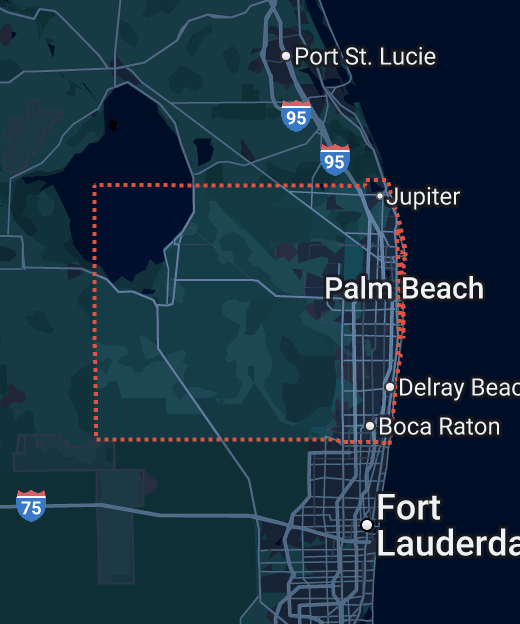
Palm Beach County spans from Boca Raton in the south to Jupiter in the north, covering 2,383 square miles. Where you live dramatically affects your daily experience, costs, and lifestyle.
For Families Prioritizing Schools: Wellington
Wellington is the undisputed champion for families with children. All elementary and middle schools are A-rated, Wellington High School maintains an A rating, and the community offers extensive parks, sports leagues, and family activities.
What You’ll Love:
- World-class equestrian facilities and culture
- Safe, family-oriented neighborhoods
- Excellent value compared to coastal areas
- Master-planned communities with resort amenities
Trade-Offs:
- 20-30 minutes inland from beaches
- More suburban, less walkable
- HOA fees can be substantial
Median Home Price: $485,000-$550,000
For Beach Lifestyle: Delray Beach
Delray Beach has won national awards as “Most Fun Small Town” and “America’s Happiest Seaside Town” for good reason. The walkable downtown Atlantic Avenue corridor offers over 100 restaurants, shops, and entertainment venues.
What You’ll Love:
- Two miles of beautiful beaches
- Walkable downtown with vibrant nightlife
- Active arts and culture scene
- Mix of demographics from young professionals to retirees
Trade-Offs:
- Higher cost of living than inland areas
- Tourist crowds during season
- Parking challenges in downtown areas
Median Home Price: $425,000-$475,000
For Luxury and Prestige: Boca Raton
Boca Raton consistently ranks as the #1 place to live in Palm Beach County. You’re paying for world-class beaches, excellent schools, upscale shopping, and a prestigious address.
What You’ll Love:
- Five miles of pristine beaches
- Top-ranked schools countywide
- Mizner Park and Town Center shopping
- Strong job market and major employers
Trade-Offs:
- Most expensive Palm Beach County option
- Can feel uptight or status-conscious
- Traffic congestion during season
Median Home Price: $599,000
For Value and Opportunity: Boynton Beach
Boynton Beach offers the best affordability while maintaining access to beaches and amenities. The median home price of $319,000 makes homeownership accessible for many relocators.
What You’ll Love:
- Most affordable coastal access
- Growing downtown with revitalization
- Family-friendly communities like Canyon Isles
- Active adult communities like Valencia Reserve
Trade-Offs:
- Less polished than Boca or Delray
- Some areas still transitioning
- Fewer high-end amenities
Median Home Price: $319,000
For Small-Town Coastal Feel: Jupiter
Jupiter maintains a laid-back, less-crowded atmosphere despite growth. It’s ideal for those seeking coastal living without the hustle of cities further south.
What You’ll Love:
- Beautiful beaches with less crowding
- Excellent fishing and boating
- Strong community feel
- Abacoa master-planned development
Trade-Offs:
- Further from major airports and urban centers
- Fewer cultural amenities than cities to the south
- Limited nightlife
Median Home Price: $550,000-$650,000
For Urban Energy: West Palm Beach
As the county seat and largest city, West Palm Beach offers urban living with downtown energy, Brightline train access, and diverse neighborhoods.
What You’ll Love:
- Walkable downtown with restaurants and nightlife
- Kravis Center and cultural attractions
- Most diverse, eclectic population
- Range of price points from affordable to luxury
Trade-Offs:
- Higher crime in some neighborhoods
- 15-20 minutes to beaches
- Variable school quality by area
Median Home Price: $400,000-$450,000
The Job Market: Finding Employment in Palm Beach County
One of the first questions relocators ask is: “Can I find work there?” The short answer is yes, though opportunities vary by industry.
Strongest Job Sectors
Healthcare: Palm Beach County’s aging population and high-quality medical facilities create consistent healthcare demand. Major employers include Cleveland Clinic, JFK Medical Center, Palm Beach Gardens Medical Center, Good Samaritan Medical Center, and Bethesda Hospital.
Positions in nursing, medical technology, healthcare administration, and specialized medicine are regularly available.
Finance and Professional Services: Palm Beach County attracts wealth, which means strong demand for financial advisors, wealth managers, CPAs, attorneys, and insurance professionals.
Technology and Remote Work: The tech sector is growing, though not as robust as Austin or San Francisco. However, many relocators work remotely for companies based elsewhere, taking advantage of Florida’s favorable tax environment.
Real Estate and Construction: Continuous growth means ongoing opportunities in real estate sales, property management, construction, architecture, and development.
Tourism and Hospitality: Year-round tourism supports hotels, restaurants, event planning, and related services. Seasonality affects some positions, but the industry remains strong year-round.
Average Salaries by Profession
While salaries may be lower than major metros like New York or San Francisco, the lack of state income tax and lower cost of living often results in comparable or better take-home pay.
Sample Salaries (2025 Averages):
- Registered Nurse: $75,000-$90,000
- Software Developer: $85,000-$120,000
- Financial Advisor: $70,000-$150,000+
- Teacher: $48,000-$65,000
- Real Estate Agent: $45,000-$150,000+ (highly variable)
- Restaurant Manager: $50,000-$70,000
Job Search Resources
- Indeed, LinkedIn, ZipRecruiter (standard job boards)
- CareerSource Palm Beach County (local workforce development)
- Florida Atlantic University career services
- Industry-specific recruiters
- Networking events through chambers of commerce
Start your job search 2-3 months before relocating if possible. Many employers understand relocation timelines and will work with qualified candidates.
Schools and Education: What Parents Need to Know
For families with children, school quality often drives neighborhood selection more than any other factor.
Top-Rated Public Schools
Palm Beach County School District is the 11th largest in the nation, serving over 200,000 students. Many schools rank among Florida’s best:
Elementary Schools (A-rated):
- Timber Trace Elementary (Boca Raton)
- Sunset Palms Elementary (Boca Raton)
- Sandpiper Shores Elementary (Boca Raton)
- All Wellington elementary schools
Middle Schools:
- Bak Middle School of the Arts (West Palm Beach)
- Carver Community Middle School (Delray Beach)
- Wellington Landings Middle School (Wellington)
High Schools:
- Spanish River High School (Boca Raton)
- Boca Raton Community High School (Boca Raton)
- Wellington High School (Wellington)
- Jupiter High School (Jupiter)
School Choice and Magnet Programs
Florida offers school choice, allowing students to apply to schools outside their zoned area if space permits. Magnet programs focusing on STEM, arts, IB curriculum, and other specializations provide additional options.
Research specific school boundaries before buying—they can change, and walking-distance assignment matters for elementary schools.
Private School Options
Palm Beach County hosts excellent private schools for families seeking alternatives:
- The Benjamin School
- Pine Crest School
- Grandview Preparatory School
- Saint Andrew’s School
- American Heritage School
Tuition ranges from $15,000-$35,000 annually depending on school and grade level.
Higher Education
- Florida Atlantic University (Boca Raton) – major state university
- Palm Beach State College – community college with multiple campuses
- Palm Beach Atlantic University (West Palm Beach) – private Christian university
- Lynn University (Boca Raton) – private university
Climate and Weather: What to Really Expect
Yes, the weather is beautiful. But let’s be honest about what living in South Florida actually means weather-wise.
The Perfect Season: November through April
This is why you’re moving here. Winter in Palm Beach County means 70-80°F days, low humidity, cool evenings perfect for outdoor dining, endless sunshine, and zero snow shoveling or heating bills.
9.5 million tourists visited Palm Beach County in 2023 alone, with winter months bringing the biggest crowds as people escape cold weather up north. This means more traffic and crowded beaches during peak season, but the weather is worth it.
The Hot Season: May through October
Summers are hot, humid, and rainy. Expect 85-95°F temperatures with high humidity making it feel like 100°F+, daily afternoon thunderstorms (brief but intense), and occasional tropical weather systems.
You’ll spend more time indoors with AC during summer, and your electricity bills will spike. But beaches are less crowded, and locals enjoy summer knowing winter perfection is coming.
Hurricane Season: June 1 – November 30
This is the reality check every relocator needs. Hurricane season runs from June through November, though most buildings in Florida are constructed to withstand extreme weather, particularly newer structures with impact-resistant windows and concrete block walls.
What Hurricane Season Actually Means:
- Most years: Minor storms, tropical depressions, lots of rain
- Some years: Direct hits requiring evacuation and preparation
- Constant monitoring of weather during active periods
- Need for hurricane preparedness: supplies, shutters, plan
I’ve lived through multiple hurricane seasons, and here’s the reality: most summers pass without major issues. When storms threaten, modern construction and building codes provide substantial protection. You’ll need to prepare your home, but catastrophic damage is relatively rare with proper preparation.
Don’t let hurricane fear prevent relocation—millions thrive here year-round. But don’t ignore it either. Budget for hurricane prep supplies, understand your evacuation zone, and get adequate insurance.
The Relocation Process: Step-by-Step Timeline
Here’s your practical roadmap for a successful Palm Beach relocation:
6-9 Months Before Move
Research and Planning Phase:
- Determine your budget accounting for all costs
- Research Best Palm Beach neighborhoods based on your priorities
- Visit Palm Beach County multiple times (different seasons if possible)
- Begin job search if employment-dependent
- Research schools if you have children
- Understand housing market conditions
Financial Preparation:
- Check your credit score and clean up any issues
- Get mortgage pre-approval to understand buying power
- Save for down payment and moving costs
- Calculate your future budget including all Florida-specific costs
3-6 Months Before Move
Securing Housing:
- Work with a local real estate agent who understands relocation
- Tour properties virtually or in-person
- Make offer and go under contract
- Complete inspections and due diligence
- Secure homeowners, flood, and windstorm insurance
- Prepare your current home for sale if applicable
Logistics Planning:
- Get moving quotes from multiple companies
- Decide what to keep vs. sell/donate
- Notify current employer and coordinate final dates
- Register children for new schools
- Research doctors, dentists, veterinarians in new area
1-2 Months Before Move
Final Preparations:
- Confirm closing date and moving truck schedule
- Transfer utilities to new address
- Update address with USPS, banks, credit cards, subscriptions
- Get Florida driver’s license (within 30 days of establishing residency)
- Register vehicles in Florida (within 10 days of employment or establishing residency)
- Find new healthcare providers and transfer medical records
- Join local community groups and nextdoor.com
Moving Month
Execution:
- Final walkthrough of new property
- Close on your new home
- Coordinate moving truck arrival
- Update voter registration
- Open accounts with local utilities, cable, etc.
- Explore your new neighborhood
- Introduce yourself to neighbors
- Find your favorite grocery store, restaurants, coffee shop
First 30 Days
Getting Settled:
- Obtain Florida driver’s license
- Register vehicles and get Florida plates
- Register to vote in Florida
- Find doctors, dentists, vets
- Join local gyms, clubs, organizations
- Explore beaches, restaurants, attractions
- Meet neighbors and start building community
Practical Considerations for Relocators
Bringing Your Vehicle
Florida requires vehicle registration within 10 days of employment or establishing residency. You’ll need:
- Current out-of-state registration
- Proof of insurance
- VIN verification
- Fees: $225-$500 depending on vehicle type and value
Some relocators sell their vehicle before moving and buy once in Florida to avoid transport costs. Consider whether your current vehicle suits Florida living (humidity affects cars, convertibles are popular, SUVs common).
Pet Relocation
Florida is pet-friendly, but:
- Update vaccinations and get health certificates for travel
- Research pet policies in rental properties or HOAs
- Find local veterinarians before moving
- Be aware of heat—pets can’t handle extended outdoor time in summer
- Watch for alligators, snakes, and wildlife in canal-facing properties
Making Friends and Building Community
Moving to a new state means rebuilding your social circle. Strategies that work:
- Join neighborhood social groups and HOA events
- Participate in activities you enjoy (sports leagues, arts classes, volunteer work)
- Attend religious services if that’s part of your life
- Use Meetup.com and Bumble BFF for friend-finding
- Be proactive—everyone here is from somewhere else, so people are generally welcoming
Common Relocation Mistakes to Avoid
After helping hundreds of families relocate, I’ve seen the same mistakes repeatedly. Learn from others’ experiences:
Mistake #1: Underestimating Insurance Costs
Don’t budget based on your previous state’s insurance costs. Florida homeowners insurance is 2-3x more expensive than many states. Get actual quotes before committing to purchase.
Mistake #2: Ignoring Hurricane Reality
Some relocators dismiss hurricane risk until facing their first storm. Take it seriously from day one—prepare your home, get proper insurance, and understand evacuation routes.
Mistake #3: Not Researching HOAs Thoroughly
Many Palm Beach County communities have HOAs with strict rules, high fees, and special assessments. Read all HOA documents carefully before buying and budget for fees that can increase.
Mistake #4: Choosing Location Based Only on Price
The cheapest home might be in a flood zone, have terrible commute times, or be zoned for struggling schools. Consider total cost of living and quality of life, not just purchase price.
Mistake #5: Moving Without Visiting
Don’t relocate based on vacation visits or online research alone. Spend extended time in your target area during summer (not just winter) to understand year-round reality.
Mistake #6: Timing Your Move During Hurricane Season
If possible, avoid relocating during peak hurricane season (August-October). Schedule moves for November-May for weather safety and easier transition.
Mistake #7: Not Understanding Florida Homestead Benefits
Florida offers valuable homestead exemption benefits ($50,000 property tax exemption) and protections (caps annual assessment increases at 3%). Apply for homestead as soon as you’re eligible by making Florida your primary residence.
Frequently Asked Questions
Is Palm Beach County a good place to relocate?
Yes, for most people seeking year-round warm weather, no state income tax, beautiful beaches, and quality of life. However, it’s not ideal for those who can’t afford higher housing and insurance costs, dislike heat and humidity, require extensive public transportation, or need major city career opportunities in certain industries.
How much money do I need to relocate to Palm Beach County?
Budget for down payment (5-20% of home price), closing costs (2-5% of purchase price), moving expenses ($3,000-$10,000 depending on distance), first year insurance ($5,000-$13,000), emergency fund (3-6 months expenses), and initial furniture/setup costs. Realistically, most families need $30,000-$75,000 in savings for a successful relocation.
Can I afford to live in Palm Beach County on a $75,000 salary?
Yes, though your neighborhood options will be limited. Target areas like Boynton Beach, Lake Worth Beach, or West Palm Beach where median home prices are lower. With good credit and down payment, you could afford homes in the $300,000-$375,000 range, though having a partner’s income or savings helps significantly.
What’s the best city in Palm Beach County for families?
Wellington wins for families prioritizing schools, safety, and family amenities. Boca Raton offers excellent schools with more urban conveniences. Jupiter provides small-town coastal feel with strong schools. Your best choice depends on budget, work location, and lifestyle priorities.
Do I need a car in Palm Beach County?
Yes, absolutely. Public transportation exists but is limited. The Brightline train connects West Palm Beach to Fort Lauderdale and Miami, but daily life requires personal transportation. Budget for vehicle ownership costs.
When is the best time to move to Palm Beach County?
November through April offers the best weather and easiest transition. Avoid peak hurricane season (August-October) if possible. Spring and fall provide good weather with fewer tourist crowds.
How do I find a job before relocating?
Start your job search 2-3 months before moving. Use standard job boards, work with recruiters, network through LinkedIn, and be transparent about your relocation timeline. Many employers in growth industries will work with qualified out-of-state candidates.
What are the biggest surprises for Palm Beach County relocators?
Most common surprises include: insurance costs are much higher than expected, summers are hotter and more humid than anticipated, you’ll need AC year-round, afternoon thunderstorms are daily during summer, traffic increases dramatically during tourist season, and everything moves at a slower pace than northern cities.
Is Palm Beach County safe?
Safety varies by neighborhood. Overall, Palm Beach County has lower crime than many major metros but higher than suburban areas elsewhere. Research specific neighborhoods—Wellington, Jupiter, Boca Raton, and Palm Beach Gardens rank as safest. Some West Palm Beach and parts of other cities have higher crime rates.
How long does it take to feel settled after relocating?
Most relocators report feeling settled within 6-12 months. The first few months involve practical logistics, months 3-6 focus on building routines and connections, and by 6-12 months, you’ve established your new normal. Give yourself grace during the transition—it takes time to build a life in a new place.
Your Palm Beach County Relocation Journey Starts Here
Relocating to Palm Beach County is one of the most exciting and life-changing decisions you’ll make. The combination of no state income tax, year-round warm weather, beautiful beaches, strong economy, and quality of life creates an opportunity to transform your daily experience and financial future.
But successful relocation requires thorough planning, realistic budgeting, and local expertise. Every family’s situation is unique, and the right neighborhood, timing, and approach vary based on your specific circumstances, career, family situation, and lifestyle priorities.
I’ve guided hundreds of families through Palm Beach County relocations—from initial neighborhood selection through closing on their dream home and settling into their new community. I understand both the excitement and anxiety that comes with major moves, and I’m here to make your transition as smooth and successful as possible.
Whether you’re relocating from New York, California, the Midwest, or internationally, I provide:
- Detailed neighborhood tours tailored to your priorities
- Current market analysis and inventory in your price range
- Connections to mortgage lenders familiar with out-of-state buyers
- Referrals to insurance providers, movers, and service providers
- School research and enrollment guidance
- Ongoing support before, during, and after your move
Ready to start your Palm Beach County relocation? I’d love to help you navigate this exciting journey. Contact me today for a complimentary relocation consultation where we’ll discuss your goals, explore neighborhoods that fit your needs, and create a customized relocation plan.
Call or text (561) 618-9984, email cenegegroup@gmail.com, or visit CenegeRealEstateGroup.com.
Your paradise awaits—let’s make your Palm Beach County dream your reality.
Expert insights from local Realtor helping families relocate. Boca Raton, Wellington, Delray Beach, Jupiter comparisons. Free relocation consultation.


